 Amalfi City Guide
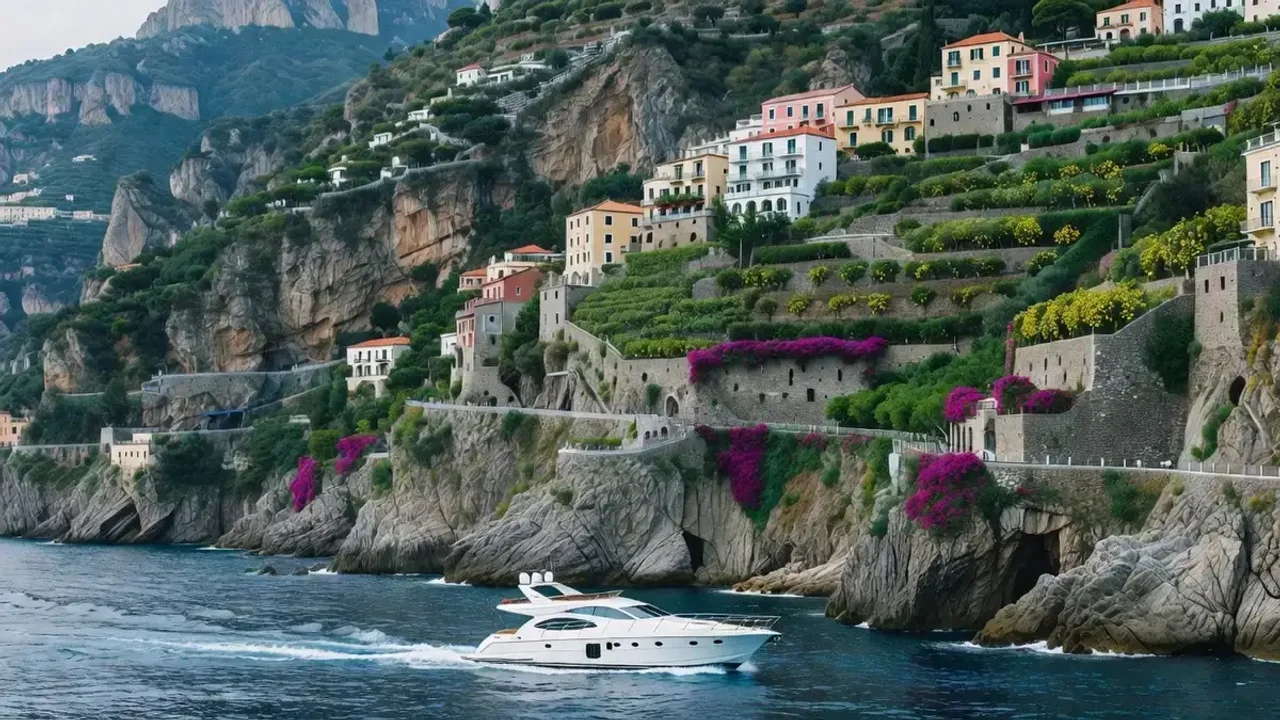
Atrani: Coastal Village Guide, Beach & Walk from Amalfi
Occupying just 0.12 square kilometers 700 meters east of Amalfi, the village of atrani is Italy's smallest municipality by land area, detailed in our Amalfi walking tours. Preserving a remarkably untouched medieval amphitheatre of whitewashed houses, labyrinthine staircases (scalinelle), and arched tunnels under the coastal highway, Atrani offers an uncrowded refuge from the bustling crowds of Amalfi. The town features the 13th-century Collegiata di Santa Maria Maddalena with its yellow majolica bell tower, a sheltered sand-and-pebble beach, and relaxed trattorias clustered around Piazza Umberto I. This guide details the 15-minute walking route from Amalfi, swimming amenities, and village sights.
Quick answer How to visit Atrani from Amalfi on foot, beach details, and sights in brief
Atrani is a 15-minute scenic walk from Amalfi via the illuminated pedestrian tunnel starting near Luna Convento. Entry is free, the village has an authentic medieval atmosphere centered on Piazza Umberto I, and the sandy beach offers both free areas and serviced sunbed rentals.
Key takeaways
- Take the pedestrian tunnel through the rock promontory rather than walking along the busy, narrow coastal highway.
- Visit the Collegiata di Santa Maria Maddalena for dramatic views overlooking the Gulf of Salerno and Atrani viaduct.
- Dine at open-air trattorias on Piazza Umberto I for traditional seafood pastas at lower prices than in central Amalfi.
Key facts
Opening hours
| Year-round | 00:00–23:59 |
|---|
Closed Open daily year-round
Admission
- Adult
- Free village access ($0)
- Reduced
- Free ($0)
- Free
- Open to all visitors without admission charge
Planning it
- Time needed
- 1.5–3 hours
- Address
- Piazza Umberto I, 84010 Atrani SA, Italy
Visiting options for exploring Atrani independently on foot from Amalfi versus guided private historical walking tours.
| Visiting Option | Cost | Key Inclusions | Access Route | Book |
|---|---|---|---|---|
| Independent Walk & Village Exploration | Free ($0) | Pedestrian tunnel, medieval alleys, public beach access | 15-minute walk from Amalfi via pedestrian tunnel | Official site |
| Private Amalfi & Atrani Medieval Walking Tour | $145.00 (€125.00) | Private local historian, secret covered passages, church history | Book online with customizable departure times | Check Availability |
scenic coastal town of Atrani clustered beneath high limestone cliffs with medieval archways and seaside piazza
 from $145.00
Private Amalfi & Atrani Medieval Alleys Guided Historical Walk
2.5-hour exclusive private historical walk linking Amalfi and medieval Atrani through covert alleyways, doge election churches, and panoramic clifftop lanes.
Check Availability from $38.50
Amalfi: Guided Walking Tour with Cathedral & Cloister Visit
2-hour historical walking tour through Amalfi's medieval lanes with ticket and licensed guide into Duomo di Sant'Andrea and the Chiostro del Paradiso.
Check AvailabilityPrices, ratings and details are the platform's own. Dollar figures are the listed prices. The platform bills in your account's currency.
Walking Routes, Sights & Beach Amenities in Atrani
Essential walking directions, architectural highlights, and beach club information for visiting Atrani from Amalfi.
1. Walking from Amalfi to Atrani: Tunnel vs Upper Path
Atrani sits directly on the eastern flank of the rocky promontory crowned by Torre Saracena. The safest and fastest route is the lit municipal pedestrian tunnel that bypasses the vehicular traffic of highway SS163. Enter the tunnel directly adjacent to the Luna Rossa parking garage on Amalfi's eastern waterfront; the flat walk takes just 10 to 12 minutes.
For dramatic aerial panoramas, an alternative ancient pathway climbs stone steps behind Amalfi's cathedral through lemon terraces and the Valle del Dragone, descending into Atrani in 25 minutes.
2. Piazza Umberto I & The Medieval Scalinelle
Piazza Umberto I serves as the beating heart of Atrani—an intimate stone square enclosed by medieval arched portals, grocery stalls, and open-air trattoria tables. Radiating outward from the piazza is a labyrinth of steep, vaulted stone staircases (scalinelle) and covered alleys (supportici). Originally engineered in the 10th century to confuse invading Saracen pirates, these shaded stone tunnels remain virtually unchanged today.
3. Collegiata di Santa Maria Maddalena
Perched on a rocky promontory overlooking the coastal viaduct stands the Collegiata di Santa Maria Maddalena Penitente, founded in 1274 to commemorate the town's deliverance from foreign raiders. The church is famous for its rococo facade and its tiered bell tower adorned with glazed yellow and green majolica ceramic tiles. Inside, visitors can admire ornate gilded baroque ceilings and 16th-century paintings by Andrea da Salerno.
4. Atrani Beach & Swimming Amenities
Atrani's beach features finer dark volcanic sand than Amalfi's rocky shore, making it softer underfoot. The seabed shelves gently without abrupt drop-offs, making it popular with Italian families. The beach is split into private concessions (lidi like Le Arcate) renting sun loungers for €25–€40 per set, and a generous central free public beach (spiaggia libera).
Due to the shadow of Monte Aureo, the beach loses direct afternoon sunlight around 16:00.
Atrani Village Map & Landmarks
Interactive map displaying the pedestrian route from Amalfi, central piazza, and historic church in Atrani.
Nearby Towns & Destinations
Continue your exploration to neighboring villages along the Amalfi shoreline.
Duomo di Amalfi
The monumental cathedral complex, Arab-Norman cloister, and crypt of St. Andrew, just 15 minutes walk west.
15 min walk westRavello Day Trip
Clifftop garden village perched directly above Atrani, famed for Villa Rufolo and dramatic coastal panoramas.
SITA bus or 1,200 uphill stepsWhere to Eat in Amalfi
Comprehensive guide to traditional trattorias, seafood specialties, and lemon culinary traditions.
Amalfi and AtraniAtrani vs Amalfi Town Comparison Matrix
Key distinctions in crowd density, beach character, walking distances, and accommodation pricing between neighbor towns.
| Category | Amalfi Town | Atrani Village | Key Difference for Travelers |
|---|---|---|---|
| Transit Connections | Central hub: all ferries & SITA buses depart here | No direct ferry; SITA bus stops on coastal viaduct | Stay in Amalfi for transit; walk to Atrani in 10 minutes for peace. |
| Crowd & Tour Volume | High (cruise tenders, day-trippers, tour groups) | Low (authentic local village, quiet residential) | Atrani feels like a genuine fishing community untouched by mass coach tours. |
| Beach Experience | Marina Grande (pebble, crowded, high lido tariffs) | Atrani Beach (soft dark sand, family-friendly, €25–€35 lido) | Atrani beach has gentler gradient and significantly cheaper sunbeds. |
| Dining Character | 40+ restaurants, 2 Michelin stars, historic cafes | 6 authentic trattorias around Piazzetta Umberto I | Atrani offers relaxed village dining with lower coperto and friendly local service. |
| Nightly Lodging Cost | €180 – €450 average per night | €120 – €280 average per night | Save 25% to 40% on nightly accommodation by basing yourself in Atrani. |
The Medieval Village of Coastal Fishermen & Doges
Essential field-tested logistics, verified local guidance, and practical advice for Atrani Village Guide: Beach, Alleys & Amalfi Walk.
The Smallest Town in Italy: Geography & Preservation
Covering an area of just 0.12 square kilometers, Atrani is officially the smallest independent municipality in Italy by land area. Wedged into the steep mouth of the Dragone mountain gorge immediately adjacent to Amalfi, Atrani has preserved its authentic medieval fishing village atmosphere virtually untouched by mass commercial tourism.
The town is built as a defensive labyrinth of whitewashed stone arches (supportici), narrow tunnels, and interconnected staircases designed to confuse and repel Saracen pirate raiders. Unlike Amalfi’s bustling market streets, Atrani feels delightfully residential, with laundry drying on balcony lines, elderly locals playing cards on stone benches, and children kicking soccer balls across Piazza Umberto I.
The Historic Doge Coronation Church
Despite its diminutive modern size, Atrani played an elevated political role during the golden age of the Maritime Republic of Amalfi. High above the square sits the Church of San Salvatore de’ Birecto, established in 940 AD.
It was inside this intimate stone sanctuary that the supreme Doges of the Republic of Amalfi were solemnly inaugurated, receiving the ducal cap (birecto). The church features magnificent bronze entrance doors cast in Constantinople in 1087, an intricately carved marble peacock relief symbolizing immortality, and ancient Roman architectural spolia.
Swimming at Spiaggia di Atrani
Practical tips for beachgoers in Atrani:
- ✓ Sheltered, Shallow Waters: The curved bay and rock breakwaters create calm, gentle waters ideal for children and relaxed swimming.
- ✓ Affordable Beach Lido Rates: Renting two sun loungers and an umbrella at Lido al Rancio or Lido Le Sirene runs €25.00 to €35.00 per day—roughly 30% cheaper than Amalfi’s Marina Grande.
- ✓ *Public Free Beach (Spiaggia Libera)*: The western sector of the beach offers a wide free sandy area where visitors can lay down their own towels without cost.
Pedestrian Route Between Amalfi and Atrani: Tunnels & Clifftop Paths
Connecting Italy's most famous maritime town to its smallest municipality takes under ten minutes on foot.
The Luna Rossa Mountain Tunnel Cut-Through
The fastest, safest pedestrian link between Amalfi and Atrani bypasses the treacherous curves of state road SS163 entirely. From the eastern edge of Amalfi's harbor, enter the multi-level Luna Rossa parking facility and follow the clearly signed, brightly illuminated pedestrian tunnel carved directly through the Monte Aureo limestone cliff. In approximately 7 to 9 minutes of level, air-conditioned walking, you emerge directly onto the western steps of Atrani above Piazzetta Umberto I. The tunnel is wheelchair-accessible, monitored by municipal security cameras, and open 24 hours daily free of charge.
The Scenic Clifftop Stairway via Via Torricella
For spectacular coastal views over both bays, take the historical footpath via Via Torricella. From the upper alleys behind Amalfi's Duomo, ascend the whitewashed stone steps climbing eastward around the base of the promontory. The trail passes beneath ancient vaulted passageways, terracotta-tiled balconies dripping with bougainvillea, and the cemetery of Santa Maria del Bando before descending into Atrani's labyrinthine residential alleys.
The walk takes 15 to 20 minutes and involves 180 stone steps.
Piazzetta Umberto I and Collegiata di Santa Maria Maddalena
Unlike Amalfi's bustling port square, Atrani's Piazzetta Umberto I functions as an authentic open-air living room sheltered under the towering arches of the coastal highway viaduct. Stop for an espresso or campari soda at Bar Birecto while watching local residents play cards. From the piazza, follow the ramps up to the Collegiata di Santa Maria Maddalena, founded in 1274.
The church features an elaborate yellow-and-green majolica tiled dome and a terrace commanding unobstructed views of Atrani's black volcanic sand beach and fishing skiffs.
Medieval Urban Design: Corti, Supportici & Local Festivals
Essential field-tested logistics, verified local guidance, and practical advice for Atrani Village Guide: Beach, Alleys & Amalfi Walk.
The Defensive Architecture of Medieval Atrani
Atrani was engineered as a fortress village to survive pirate invasions. The village layout features zero open avenues; instead, stone houses are built directly on top of each other, connected by vaulted tunnels called supportici and shared communal courtyards called corti.
During Saracen raids, heavy wooden gates at the village entrances were barred, and residents retreated upwards into the interconnected vertical maze, dropping boiling water and stones from upper windows onto attackers trapped in the narrow stone passages below.
The Feast of Saint Mary Magdalene (*Festa di Santa Maria Maddalena*)
On July 22nd, Atrani celebrates its patron saint, Mary Magdalene, with one of the most lively traditional festivals on the coast. A solemn maritime procession carries the historic statue of the saint onto decorated fishing boats, followed by an extraordinary midnight fireworks display fired from floating barges in the bay that illuminates the entire cliff amphitheater in dazzling cascading colors.
The 750 Stairs to Santa Maria del Bando & Masaniello’s Cave
Essential field-tested logistics, verified local guidance, and practical advice for Atrani Village Guide: Beach, Alleys & Amalfi Walk.
Climbing to the Sanctuary of Santa Maria del Bando
For energetic hikers, climbing the 750 whitewashed stone stairs from Piazza Umberto I up to the cliffside chapel of Santa Maria del Bando (perched 150 meters above Atrani) provides one of the most rewarding off-the-beaten-path vistas on the coast. Built against sheer vertical rock, the chapel was historically where town proclamations (bandi) were publicly read aloud to the village below.
Immediately adjacent lies Grotta di Masaniello, the natural cliff cave where Tommaso Aniello (Masaniello), the charismatic young leader of the 1647 Neapolitan revolt against Spanish Habsburg taxation, famously hid from royal troops.
2026 Practical Field Guide: Timing, Payments & Local Etiquette for Atrani
Crucial on-the-ground operational rules, financial realities, and daily visitor protocols to ensure a smooth, rewarding experience at Atrani.
Optimal Visiting Windows & Peak Crowd Flow at Atrani
Experiencing Atrani without overwhelming crowds requires understanding the sharp contrast between day-tripper hours and resident rhythms. Tour buses from Naples and Sorrento arrive along the coastal highway between 10:00 and 10:30, releasing high passenger volumes into public plazas and popular landmarks until approximately 15:30. By contrast, the early morning hours between 07:30 and 09:30 offer tranquil streets, cool temperatures, and pristine photographic light where limestone cliffs glow gold.
During July and August, midday temperatures routinely climb above 34°C (93°F); taking a midday pause in shaded cafes or valley interiors between 12:30 and 15:00 protects you from heat exhaustion while allowing you to enjoy a second sightseeing wave after 16:30 when soft evening breezes (ponente) begin to blow.
Payment Realities, Local ATMs & Avoiding Conversion Surcharges
While European legislation mandates card acceptance for retail purchases, daily life on the Amalfi Coast frequently demands physical euro cash. Municipal public restrooms (€1.00 coin turnstiles), Tabacchi bus ticket counters, coin-operated beach rinse showers, and luggage porter tips operate exclusively on cash. When withdrawing funds, steer completely clear of standalone yellow-and-blue Euronet ATMs positioned near ferry docks and souvenir shops; these third-party terminals employ predatory Dynamic Currency Conversion (DCC) models that impose stealth markups of 11% to 14% on foreign exchange.
Always use official Italian bank branch ATMs (Bancomat) operated by established national institutions such as Intesa Sanpaolo or UniCredit located on main town squares. When prompted by card terminals during restaurant or shop checkouts, always select the option to be charged in local EUR rather than your home billing currency to let your domestic bank handle conversion at interbank exchange rates.
Public Facilities, Modesty Guidelines & Hydration Points
Navigating public spaces around Atrani requires adherence to civic regulations and cultural norms. Historical religious sanctuaries enforce strict modesty codes: shoulders and knees must be fully covered, and visitors wearing sleeveless tops, crop tops, or short beachwear are turned away at the threshold. Keep a lightweight linen scarf or cotton wrap accessible in your daypack to drape over your body before entering historic buildings.
Municipal bylaws also prohibit walking through town streets or commercial promenades shirtless or solely in swimwear, carrying fines up to €250. Clean municipal public restrooms are situated at primary transit terminals and harbor piers, staffed throughout the day for a €1.00 fee. For hydration, seek out municipal cast-iron drinking fountains (fontanelle) that continuously dispense cold, potable mountain spring water; carrying a reusable stainless steel flask eliminates the need to purchase single-use plastic bottles while ensuring you remain well-hydrated throughout the day.
With these etiquette rules in mind, you can turn to the best things to do in Amalfi, where the top attractions around Atrani are laid out in one guide to things to do in Amalfi.
Regional Transit Coordination & Terrain Navigation: Atrani
Strategic transport mechanics, luggage management, and topographic realities when exploring Atrani and adjacent coastal destinations.
Maritime Ferry Logistics & Sea Swell Contingencies
Maritime passenger catamarans operated by Travelmar, NLG, and Positano Jet represent the fastest, most reliable method for traveling between Amalfi and neighboring coastal towns, bypassing highway traffic jams completely. During the April-to-October operating season, passenger ferries run frequent scheduled departures connecting Amalfi to Positano, Capri, Salerno, Minori, and Maiori. Boarding occurs from Molo Pennello, where passengers should queue at least 15 minutes before the departure bell.
However, travelers must monitor maritime conditions: strong southwesterly winds and heavy sea swells (mare agitato) can lead harbor masters to suspend docking at exposed piers like Positano or Amalfi. In such events, transit automatically shifts to inland SITA regional buses, causing bus terminal queues to swell. Maintaining the official SITA bus schedule on your smartphone and booking morning ferry runs—when sea swells are typically lowest—provides reliable travel security.
Luggage Transfers, Porters & Vertical Staircase Realities
The sheer limestone topography of the Amalfi Coast means that reaching hotels, guesthouses, and scenic viewpoints involves ascending dozens or hundreds of steep stone steps (scale). Wheeled suitcases cannot be rolled across ancient irregular cobblestones or up steep stairways. Travelers arriving with full-sized luggage should utilize municipal luggage storage facilities at the port (€5.00 to €8.00 per piece) or coordinate private luggage porter services directly through their accommodation or harbor kiosks (€10.00 to €15.00 per bag).
Professional porters utilize specialized motorized stair-climbing hand trucks or carry bags up steep residential alleys, sparing travelers exhausting physical strain under direct coastal sun. Packing light in carry-on backpacks or compact duffels remains the single most effective way to navigate the vertical layout of coastal settlements.
Footwear Architecture, Heat Safety & Emergency Care Protocols
Walking distances around Atrani accumulate rapidly, often totaling 10,000 to 16,000 steps per day across uneven stone surfaces, steep inclines, and polished marble steps that become dangerously slick when wet. Smooth leather-soled shoes, flip-flops, and high heels present serious slipping hazards; visitors should wear supportive walking shoes, trail running shoes, or sturdy hiking sandals featuring aggressive rubber tread patterns. In case of unexpected medical emergencies, dial 112 (universal European emergency service) or 118 directly for ambulance dispatch.
The primary local emergency medical clinic (Pronto Soccorso) serving the central coast is located in nearby Castiglione di Ravello, equipped with bilingual medical staff, diagnostic equipment, and triage units. Local pharmacies (farmacie) in central squares rotate emergency night shifts and can dispense over-the-counter remedies for motion sickness, dehydration, and minor sprains.
Frequently Asked Questions about Atrani
Can you easily walk from Amalfi to Atrani?
Yes, the walk takes only 10 to 15 minutes via the lit pedestrian tunnel next to the Luna Rossa parking garage, completely off the car highway.
Is Atrani worth visiting if I am staying in Amalfi?
Absolutely. Atrani offers an authentic, untouristed atmosphere, quieter dining, and Italy smallest municipality within a short stroll from Amalfi.
Is Atrani beach sandy or pebbly?
Atrani beach has fine dark volcanic sand mixed with small pebbles, making it softer and easier underfoot than the coarse pebbles of Amalfi.
Do ferries stop at Atrani?
No, ferries do not dock at Atrani due to shallow water and lack of a passenger pier. Arrive via ferry in Amalfi and take the short walk to Atrani.
How long do you need to visit Atrani?
A visit typically takes 2 to 3 hours to explore the narrow alleys, visit the collegiate church, and enjoy a relaxed lunch or beach swim.
How do you walk from Amalfi to Atrani without walking on the road?
Walk from Amalfi along the seaside sidewalk to Parcheggio Luna Rossa. Inside the garage lobby, enter the well-lit pedestrian tunnel carved through the rock. The tunnel takes just 4 minutes of flat, safe walking and emerges directly into the historic alleyways of Atrani.
Does the SITA bus stop in Atrani?
Yes, SITA buses travelling between Amalfi, Minori, and Salerno stop on the arched highway bridge directly above Atrani beach. However, walking from Amalfi via the pedestrian tunnel is much faster than waiting for the bus.
Can you walk between Amalfi and Atrani with rolling luggage?
Yes, but only via the Luna Rossa pedestrian tunnel. The tunnel route is completely flat and paved. However, once you emerge on the Atrani side, reaching your accommodation will likely involve stone steps, as Atrani has zero road traffic in its historic core.
Is Atrani beach less crowded than Amalfi Marina Grande?
Yes. Atrani's beach is smaller (roughly 130 meters wide) and sees significantly fewer day-trippers. About half the beach is managed by private lidos renting pairs of sun loungers for €30 to €45, while the western flank remains a free public beach.
What are the best dining spots in Atrani?
Ristorante Savò on the main piazzetta serves exceptional local seafood pasta (such as scialatielli with clams and zucchini), while Le Arcate sits directly on the seafront beneath the viaduct, offering fresh catch-of-the-day fish and wood-fired Neapolitan pizza.
What is the best way to handle tipping at Atrani?
Tipping is not mandatory in Italy. Most sit-down establishments include a per-person cover charge (coperto) of €2.00 to €4.00 on the final bill for bread and table setting. Leaving 5% to 10% in cash for attentive service or rounding up the bill by a few euros is a generous and appreciated gesture, but it is never expected or demanded.
Can you use international credit cards everywhere near Atrani?
Visa and Mastercard are accepted at virtually all hotels, sit-down restaurants, boutiques, and ferry ticket windows. However, American Express is occasionally declined by small family-run trattorias. Always carry €40.00 to €60.00 in small euro banknotes for bus tickets, espresso bars, and public restrooms.
How do you check for scheduled transport strikes (sciopero) affecting Atrani?
Italian transit unions occasionally stage 24-hour general strikes (sciopero). By Italian law, minimum guaranteed service windows (fasce di garanzia) operate between 06:00–09:00 and 18:00–21:00. Check the official Ministry of Infrastructure and Transport (MIT) strike calendar online or ask your hotel reception 24 hours prior to long travel days.
Prices, hours and terms are set by the venue or operator and confirmed at checkout.
We may earn a commission if you book through one of our links, at no extra cost to you. Full affiliate disclosure